
 Posts
Posts


Every household must have a first-aid kit. A well put together kit can be used for human and pet emergencies equally. They can be purchased or homemade. I have 2: one for the house and one I keep in my car.
1. A muzzle that fits your size dog. No one wants to think that their dog will ever bite them, however, when a dog is in pain it will lash out. Again, this may also be used for humans;)
2. Roll gauze; this could also be used as a muzzle in a pinch. This is used to secure bandages.
3. Large sterile gauze pads, tape, antibiotic ointment, and wraps to clean a wound and cover it so you can get to an emergency room.
4. An assortment of Band-Aids.
5. Non-latex gloves
6. Bleeding can be a serious problem. Consider purchasing Quick Clot or Kytostat online. These are special chemically-treated dressings that help blood clot instantly.
7. An inexpensive stethoscope is great to have to listen to the heartbeat or abdomen for increased belly noises.
8. Cloth to be used as a triangle bandage to make a sling, cover an injury, or hold on a larger wound to control bleeding.
9. Tweezers to remove small splinters, big scissors to cut clothing or gauze, and self cling style Vetwrap.
10. Benadryl and aspirin should be in every HUMAN first-aid kit. Benadryl can be used in case allergic reaction is suspected in dogs upon advice from you vet. An aspirin should be chewed if a human heart attack or stroke is suspected. is one inexpensive item everyone should have in their first aid kit, but most people don't.
11. Petroleum jelly and plastic cling wrap
12. Eye wash
13. Rectal thermometer
14. Hydrogen Peroxide- to induce vomiting in case of toxic ingestion
15. Copy of vaccines/current labwork, emergency directions, emergency phone numbers
A first-aid kit is to be considered first line treatment until you can get to a veterinarian.
Chris
Sunday, October 25, 2009


Thursday, October 22, 2009
A Vomit By Any Other Name Would Be... Regurgitation?
So you go to the vet and you say "My dog has been vomiting." The vet turns to you and says "Are you sure?"
Well, I think I know vomit when I see it.....Don't I? Stuff comes out the wrong way. Isn't it all the same?
Actually, there is a big difference in vomit and regurgitation and they point to two very different disease pathways. One path takes us down food intolerance, irritable bowel, obstruction, etc. The other can take us down the path of acid imbalance, esophageal abnormalities, or neuromuscular issues. It can be very difficult to tell the difference between vomiting and regurging.
Vomiting is a rather forceful expulsion of stomach contents. With regurgitation there may be little warning and the food just seems to fall out of the mouth. There is a great video model at
http://www.veterinarypartner.com/Content.plx?P=A&C=17&A=2809&S=1 . There more informed you are, the quicker we can make a diagnosis and get your pet help.
Chris
Well, I think I know vomit when I see it.....Don't I? Stuff comes out the wrong way. Isn't it all the same?
Actually, there is a big difference in vomit and regurgitation and they point to two very different disease pathways. One path takes us down food intolerance, irritable bowel, obstruction, etc. The other can take us down the path of acid imbalance, esophageal abnormalities, or neuromuscular issues. It can be very difficult to tell the difference between vomiting and regurging.
Vomiting is a rather forceful expulsion of stomach contents. With regurgitation there may be little warning and the food just seems to fall out of the mouth. There is a great video model at
http://www.veterinarypartner.com/Content.plx?P=A&C=17&A=2809&S=1 . There more informed you are, the quicker we can make a diagnosis and get your pet help.
Chris
Saturday, October 17, 2009
Just Kind of Cool Links
Some things are trivial in the grand scheme of the world, however some things are just flat out cool or ridiculous and need to be shared.
http://www.youtube.com/watch?v=ytedC1heY_8&feature=related : Let's face it; if a dog and cat can be best friends, by the world a coke, hug, whatever you gotta do, but love each other.
http://www.pawnation.com/2009/10/14/gerbil-gymnastics/?icid=main|main|dl3|link7|http%3A%2F%2Fwww.pawnation.com%2F2009%2F10%2F14%2Fgerbil-gymnastics%2F This is just too ridiculous not to go viral. For all of you performance junkies who can't get enough agility this one's for you!
Chris
http://www.youtube.com/watch?v=ytedC1heY_8&feature=related : Let's face it; if a dog and cat can be best friends, by the world a coke, hug, whatever you gotta do, but love each other.
http://www.pawnation.com/2009/10/14/gerbil-gymnastics/?icid=main|main|dl3|link7|http%3A%2F%2Fwww.pawnation.com%2F2009%2F10%2F14%2Fgerbil-gymnastics%2F This is just too ridiculous not to go viral. For all of you performance junkies who can't get enough agility this one's for you!
Chris
Friday, October 16, 2009
It Takes A Village
Working at a veterinary clinic is not all playing with puppies and kittens. Many times we have to give people very bad news. Sometimes this news is that their pet has a disease that will seriously impact their life. Sometimes that news is that they will be losing their pet soon.
Regardless of the news the message should be the same. You are not alone. We are here for you. Whether it is to point you toward outside resources, provide medications and services, or just to listen to stories, we are here.
Illness is an insidious thing. It robs you of quality of life, cheats you out of good memories, and steals away what you love. It makes you terrified, unsure, and insecure. Yet in that frame of mind many import decisions still must be made. There is not time out button. Our place is to be the ground and help you catch your breath and make clear, good decisions that suite your family. Our place is to help you to prepare. You have already been given devastating news. Now we have to guide you through the healing or end of life process.
There are many times when we can improve quality of life. This does not always mean complete healing. Sometimes it is only giving you a few days to say goodbye. Sometimes it is giving hope when all seems hopeless, but we can achieve healing. No matter what the outcome, if you hear only one thing; You are not alone.
chris
Regardless of the news the message should be the same. You are not alone. We are here for you. Whether it is to point you toward outside resources, provide medications and services, or just to listen to stories, we are here.
Illness is an insidious thing. It robs you of quality of life, cheats you out of good memories, and steals away what you love. It makes you terrified, unsure, and insecure. Yet in that frame of mind many import decisions still must be made. There is not time out button. Our place is to be the ground and help you catch your breath and make clear, good decisions that suite your family. Our place is to help you to prepare. You have already been given devastating news. Now we have to guide you through the healing or end of life process.
There are many times when we can improve quality of life. This does not always mean complete healing. Sometimes it is only giving you a few days to say goodbye. Sometimes it is giving hope when all seems hopeless, but we can achieve healing. No matter what the outcome, if you hear only one thing; You are not alone.
chris
Thursday, October 15, 2009
Doggie Daycare and You
There have been some amazing advances in our time. The computer-I'm a big fan. The cell phone. GPS! The doggie daycare.
What, daycare? You read my right, folks. The doggie daycare is a resource beyond resources. It has so many applications it is difficult to cover all of them.
It has become a great boon to the dog that suffers from separation anxiety. These dogs often cannot be crated, are destructive, and can put a massive strain on the pet/human connection. Daycare gets these dogs into a safe environment that helps keep the peace at home. It is also a healthy environment since all dogs must be current on vaccinations. Puppies that are just beginning to learn how to relate to the world are socialized to both people and other dogs. It is a phenomenal confidence booster for the shy, introverted dog to learn how to develop doggie friendships. For the wild child we all know and love it is a great way to burn off excess energy and have a tired pooch at the end of the day. This is especially great if you have physical limitations and cannot take Fido for a good hard run yourself, or are just too tired at the end of a long day at work.
This is a great, safe place to temporarily "stash" your dogs if you are showing your home for sale, having a large party where people will be going in and out of your home, or if you are having loud home improvements done. If you are going on vacation you don't have to feel guilty about leaving your dog couped up in a cramp boarding kennel.
It is imperative for a well rounded dog to have the ability to mouth, use their strength, and crash into other dogs. They cannot get this mental and physical stimulation from us. Many daycare facilities offer 1/2 day rates and frequent buyer cards to help defray costs. Dogs are supervised at all times to ensure everyone plays nicely with others. Some even have webcams so you can peek in and watch the fun.
Tour a daycare near you today. Your dog will thank you for it.
chris
What, daycare? You read my right, folks. The doggie daycare is a resource beyond resources. It has so many applications it is difficult to cover all of them.
It has become a great boon to the dog that suffers from separation anxiety. These dogs often cannot be crated, are destructive, and can put a massive strain on the pet/human connection. Daycare gets these dogs into a safe environment that helps keep the peace at home. It is also a healthy environment since all dogs must be current on vaccinations. Puppies that are just beginning to learn how to relate to the world are socialized to both people and other dogs. It is a phenomenal confidence booster for the shy, introverted dog to learn how to develop doggie friendships. For the wild child we all know and love it is a great way to burn off excess energy and have a tired pooch at the end of the day. This is especially great if you have physical limitations and cannot take Fido for a good hard run yourself, or are just too tired at the end of a long day at work.
This is a great, safe place to temporarily "stash" your dogs if you are showing your home for sale, having a large party where people will be going in and out of your home, or if you are having loud home improvements done. If you are going on vacation you don't have to feel guilty about leaving your dog couped up in a cramp boarding kennel.
It is imperative for a well rounded dog to have the ability to mouth, use their strength, and crash into other dogs. They cannot get this mental and physical stimulation from us. Many daycare facilities offer 1/2 day rates and frequent buyer cards to help defray costs. Dogs are supervised at all times to ensure everyone plays nicely with others. Some even have webcams so you can peek in and watch the fun.
Tour a daycare near you today. Your dog will thank you for it.
chris
Wednesday, October 14, 2009
Is the News Friend or Foe
Turn on the news these days and Spinach will kill you, if the handshakes don't get ya first, or sprouts...sprouts are the enemy, no wait peanut butter- don't forget the peanut butter, unless you had piece of Chinese candy, or you where sharing kibble with Fido and ate Melamine. Whew!
Still with me? Must be a non-eater. Okay, so you made it past the land mines of the grocery aisles. Now you only have lead paint, those pesky handshakes again, the air you breath, the pigs you kiss, etc trying to finish the job.
Listen to the media or read the papers and the world is a terrible place. The newest thing is the massive parvo "outbreak". Are there diseases out there? Yes. Should you be terrified-no. Germs are a double edged sword-they cause disease, but they also build immunity. What can you do to stay safe? Do your best and leave the rest to karma.
Keeping pets healthy is much like keeping yourself healthy. It starts with great veterinary care. A pet that is properly vaccinated, parasite free, and in good overall health can fight off or recover from disease and environmental toxins more efficiently. Secondly, good food and clean water help build a strong immune system. Only you can define what "good food and clean water" means. Third is a happy, loved pet. A pet that has mental challenges, lots of physical exercise, and plenty of love and attention will be healthier than one that is neglected and ignored. Fourth comes down to common sense. Be careful of the areas you take you dog walking. If your neighbors don't care for their pets or vaccinate, take your dog to another neighborhood for walks. Be mindful of lose stool or vomit puddles on walks. If you pet shows signs of illness keep them home. These strategies are very similar to keeping a child healthy.
No matter how vigilant you are illness and man made disasters will still happen. However, there are precautions that can be taken to keep Fluffy and Fido as safe as possible. Listen for food recalls, disease outbreaks, and illness warnings. However, take everything with a grain of salt, and try to decipher fact from sensationalism. This just in: Chicken little called; the sky is not falling.
chris
Still with me? Must be a non-eater. Okay, so you made it past the land mines of the grocery aisles. Now you only have lead paint, those pesky handshakes again, the air you breath, the pigs you kiss, etc trying to finish the job.
Listen to the media or read the papers and the world is a terrible place. The newest thing is the massive parvo "outbreak". Are there diseases out there? Yes. Should you be terrified-no. Germs are a double edged sword-they cause disease, but they also build immunity. What can you do to stay safe? Do your best and leave the rest to karma.
Keeping pets healthy is much like keeping yourself healthy. It starts with great veterinary care. A pet that is properly vaccinated, parasite free, and in good overall health can fight off or recover from disease and environmental toxins more efficiently. Secondly, good food and clean water help build a strong immune system. Only you can define what "good food and clean water" means. Third is a happy, loved pet. A pet that has mental challenges, lots of physical exercise, and plenty of love and attention will be healthier than one that is neglected and ignored. Fourth comes down to common sense. Be careful of the areas you take you dog walking. If your neighbors don't care for their pets or vaccinate, take your dog to another neighborhood for walks. Be mindful of lose stool or vomit puddles on walks. If you pet shows signs of illness keep them home. These strategies are very similar to keeping a child healthy.
No matter how vigilant you are illness and man made disasters will still happen. However, there are precautions that can be taken to keep Fluffy and Fido as safe as possible. Listen for food recalls, disease outbreaks, and illness warnings. However, take everything with a grain of salt, and try to decipher fact from sensationalism. This just in: Chicken little called; the sky is not falling.
chris
Monday, October 12, 2009
Ode To A Fallen Friend
Today we lost a very special friend. Her name was Aggie and she was a very dear friend of Morris Hospital. Aggie was wiry little Terrier. Terriers are known for heart, courage, and tenacity. It was those traits that helped her to live past crisis after crisis in these last years.
About 2 years ago, Aggie started having neck pain. Aggie was evaluated and given the standard diagnosis for a dog suspected of having a spinal cord tumor; don't buy any big bags of dog food. Her family, whom were so dedicated to her, were heartbroken. We all figured she had weeks to live. Aggie had other plans.
Weeks went by, Aggie's family would call us up and ask for a refill of medications. When asked how she was doing, they would reply "Well, she's.......better." We all watched for signs that she needed to cross over, but they just didn't come. She became less painful. She got her bounce back. She got healthy.
Then at the beginning of the year Aggie was rushed to the emergency room. She was diagnosed with a severe heart condition. Again, she was given a few weeks to live. Aggie had other plans.
Aggie responded to medication. Her breathing strengthened. She got her energy back. She still enjoyed eating, her walks......life. Every time we counted the little dog out, all 25 pounds of her bullied right back. Dr. Morris calls these little spirits energizer bunnies.
Today, at the ripe old age of 15, Aggie crossed over the Rainbow Bridge. Her pain is over, while ours is just beginning. Aggie never said "I can't. I hurt too much today." Aggie was always up for a stroll, a ball toss, a snuggle. We can learn much from Aggie. Her memories will remain with us for a lifetime. She will be missed. Rest well, old friend.
chris
About 2 years ago, Aggie started having neck pain. Aggie was evaluated and given the standard diagnosis for a dog suspected of having a spinal cord tumor; don't buy any big bags of dog food. Her family, whom were so dedicated to her, were heartbroken. We all figured she had weeks to live. Aggie had other plans.
Weeks went by, Aggie's family would call us up and ask for a refill of medications. When asked how she was doing, they would reply "Well, she's.......better." We all watched for signs that she needed to cross over, but they just didn't come. She became less painful. She got her bounce back. She got healthy.
Then at the beginning of the year Aggie was rushed to the emergency room. She was diagnosed with a severe heart condition. Again, she was given a few weeks to live. Aggie had other plans.
Aggie responded to medication. Her breathing strengthened. She got her energy back. She still enjoyed eating, her walks......life. Every time we counted the little dog out, all 25 pounds of her bullied right back. Dr. Morris calls these little spirits energizer bunnies.
Today, at the ripe old age of 15, Aggie crossed over the Rainbow Bridge. Her pain is over, while ours is just beginning. Aggie never said "I can't. I hurt too much today." Aggie was always up for a stroll, a ball toss, a snuggle. We can learn much from Aggie. Her memories will remain with us for a lifetime. She will be missed. Rest well, old friend.
chris
Sunday, October 11, 2009
It's in the Genes-How to Choose a Good Breeder
Ads in the paper, names on a list, numbers on bulletin boards; just how are you supposed to choose a good breeder? It can be difficult, but with some time and research you can make a good decision.
You start by researching you chosen breed. Do online reading, join breed chat groups, and read books on the breed. Once you have decided on the breed for your family, a local dog show can be a great resource. There you can see your breed in person, as well as network with breeders. The AKC is another resource. They can connect you to active breeders in good standing with the organization.
*The AKC is only a registry. They do not police nor endorse the breeders that register with them. Being AKC registered does not guarantee healthy, social dogs. It also does not mean that every breeder on your list will have the high ethical standards that you should demand.
Once you must visit the kennel-if local- or ask for pictures if not- where you will meet the dam and other dogs. Look for great temperaments, clean, social conditions, and a breeder that is willing to share what their breeding program is trying to accomplish. They should be able to tell you what is good AND bad in their lines, and offer a health guarantee for the puppy you are purchasing. The sire and dam must have passed necessary health clearances specific to their breeds. The puppies should be housed in clean conditions, kept in the house, and appear healthy and outgoing. Anything less than this and RUN to another breeder. Do not fall into the "puppy mill" trap and feel as if you have to rescue a puppy to get it out of a bad situation. This only leads to a potential lifetime of behavior and health problems.
A good breeder will welcome such scrutiny. They will be as careful about approving you as you are about approving them. A good breeder will also offer to be a source of support throughout the rest of the dog's life. They will welcome questions about feeding, training, health, and that breed that will compliment your veterinarian's care. When it is the right mix it will feel like relationship and not just a sale. Good luck and have fun with your knew little furry friend.
chris
You start by researching you chosen breed. Do online reading, join breed chat groups, and read books on the breed. Once you have decided on the breed for your family, a local dog show can be a great resource. There you can see your breed in person, as well as network with breeders. The AKC is another resource. They can connect you to active breeders in good standing with the organization.
*The AKC is only a registry. They do not police nor endorse the breeders that register with them. Being AKC registered does not guarantee healthy, social dogs. It also does not mean that every breeder on your list will have the high ethical standards that you should demand.
Once you must visit the kennel-if local- or ask for pictures if not- where you will meet the dam and other dogs. Look for great temperaments, clean, social conditions, and a breeder that is willing to share what their breeding program is trying to accomplish. They should be able to tell you what is good AND bad in their lines, and offer a health guarantee for the puppy you are purchasing. The sire and dam must have passed necessary health clearances specific to their breeds. The puppies should be housed in clean conditions, kept in the house, and appear healthy and outgoing. Anything less than this and RUN to another breeder. Do not fall into the "puppy mill" trap and feel as if you have to rescue a puppy to get it out of a bad situation. This only leads to a potential lifetime of behavior and health problems.
A good breeder will welcome such scrutiny. They will be as careful about approving you as you are about approving them. A good breeder will also offer to be a source of support throughout the rest of the dog's life. They will welcome questions about feeding, training, health, and that breed that will compliment your veterinarian's care. When it is the right mix it will feel like relationship and not just a sale. Good luck and have fun with your knew little furry friend.
chris
Monday, October 5, 2009
Love Means Sometimes Having to Say Goodbye:Details of the Euthanasia Process
When the heart hurts sometimes we go on auto pilot and loose our nerve to ask important questions. Sometimes people will shy away from euthanasia as a choice because of all of the little unknowns. You are already pre-grieving; it just seems barbaric to have to handle the "business" details of the procedure. Questions swirl that can feel dark. You may feel that we are going to judge you for putting "petty" earthly matters ahead of loving your pet.
Let me be the first to say BULL! If anyone judges you scoop your pet up and go somewhere else-it's a bad fit. There are many things in medicine that seem mysterious. If it brings you comfort, helps you to make decisions, or helps to minimize your pain then ask away. What happens during the death process? What are my options for burial? How much will everything cost?
The process of euthanasia will very from clinic to clinic. The goal of any clinic should be to create and environemtn that makes you feel as safe and comfortable as possible. We want to minimize the distress and fear that the pet must feel. Some clinics place an IV catheter so that the final injection can be giving easily. Some clinics give the pet a sedative so that they are unaware of the final moments. This also can ease much of the natural, but unpleasant to view, post death changes that can occur after the euthanasia injections is given. The actual injection is a very strong overdose of an anesthetic. It causes brain death often before it is completely given. This injection is painless and works quickly. Even with sedation, the electrical impulses leaving the body can cause muscle twitches or cause the pet to vocalize. This is known as the "death moan". These are not the pet "fighting death" they are just normal post death events. The pet will not close their eyes and urinate and defecate.
The clinic will also discuss burial options with you. You can choose cremation with the ashes returned to you. You can choose to have the pet buried in a plot, complete with funeral, at any pet cemetery of your choosing. You may also decide that group cremation is what is best for your family. This option is the most economical. The pet will be cremated with other pets and the ashes spread over the other pet's graves. No matter which option you choose, your pet will be treated with dignity.
This decision is never easy, but you make it from a place of love for your pet. Now that you know some of the behind the scenes stuff maybe it will be a little less scary.
chris
Let me be the first to say BULL! If anyone judges you scoop your pet up and go somewhere else-it's a bad fit. There are many things in medicine that seem mysterious. If it brings you comfort, helps you to make decisions, or helps to minimize your pain then ask away. What happens during the death process? What are my options for burial? How much will everything cost?
The process of euthanasia will very from clinic to clinic. The goal of any clinic should be to create and environemtn that makes you feel as safe and comfortable as possible. We want to minimize the distress and fear that the pet must feel. Some clinics place an IV catheter so that the final injection can be giving easily. Some clinics give the pet a sedative so that they are unaware of the final moments. This also can ease much of the natural, but unpleasant to view, post death changes that can occur after the euthanasia injections is given. The actual injection is a very strong overdose of an anesthetic. It causes brain death often before it is completely given. This injection is painless and works quickly. Even with sedation, the electrical impulses leaving the body can cause muscle twitches or cause the pet to vocalize. This is known as the "death moan". These are not the pet "fighting death" they are just normal post death events. The pet will not close their eyes and urinate and defecate.
The clinic will also discuss burial options with you. You can choose cremation with the ashes returned to you. You can choose to have the pet buried in a plot, complete with funeral, at any pet cemetery of your choosing. You may also decide that group cremation is what is best for your family. This option is the most economical. The pet will be cremated with other pets and the ashes spread over the other pet's graves. No matter which option you choose, your pet will be treated with dignity.
This decision is never easy, but you make it from a place of love for your pet. Now that you know some of the behind the scenes stuff maybe it will be a little less scary.
chris
Sunday, September 27, 2009
Here A Duck, There A Duck-Don't Let Your Dog's Food Quack
Walk down any cereal aisle and you will see the cure for our taste bud boredom. Cinnamon cereal, cereal with dried berries, cereal in vivid Technicolor, sugary or branned it's all there folks. Many dog food companies are trying to brainwash you into thinking that our four legged friends need this same variety in their dishes, also. Nutrition is a subject near and dear to my heart. I don't want the broad blanket term "good quality" ingredients that are often more marketing gimmick than substance. Nutrition is a very personal decision. You must decide what fits for your family. As long as you have made an informed decision, then it is the right one for your pet.
Walking down a local pet super store's aisles the other day I looked through the dog foods for sale. I guess overall I must applaud them. They have made true quality, natural, holistic, healthy food much more readily available than ever before. Food lines that are free of destructive chemicals and have good nutrition sources such as Wellness, California Natural, Fromm, or Merrick are right there on the shelves.
One massive disservice that pet stores and pet food companies are doing you and your pets is making every protein source under the sun available. Sometimes 3 or 4 in one bag! It's not your fault- you are just trying to provide some variety to your pet. Beef, chicken, certain fish types, even lamb are perfectly acceptable for over the counter feeding. However, just for the fun of it some manufacturers are offering duck, buffalo, rabbit, venison, and other novel proteins for the taking. Some under the misguided heading of being an "allergy" formula. This practice is DANGEROUS for your pet!
I equate duck, or rabbit with medicine. If your pet develops a food allergy or intolerance the only way to combat this is by giving it ingredients it has not had before and therefore NOT allergic to. If your pet has been exposed to these proteins during a badly performed food trial, that food source is now useless to treat your pet. Often these over the counter products are a mix of hypoallergenic proteins with known allergens such as corn, soy, or wheat. Perhaps the company just got done manufacturing a beef formula then switches over to running a line of duck formula without proper sanitation. If your pet is allergic to beef now some of that beef has just gotten into your pet's duck bag. BOOM, problem!
These pet food manufacturers mean well. It is a great idea to make allergy control more accessible. However, allergy control must be handled in a responsible manner. If your pet has eating/appetite issues, itching/allergies, or digestive issues please work with your vet before introducing these novel proteins. You wouldn't hop behind the Walgreens pharmacy counter and pick out medications that sounded like they might help. Doesn't your pet deserve the same protection?
Chris
Walking down a local pet super store's aisles the other day I looked through the dog foods for sale. I guess overall I must applaud them. They have made true quality, natural, holistic, healthy food much more readily available than ever before. Food lines that are free of destructive chemicals and have good nutrition sources such as Wellness, California Natural, Fromm, or Merrick are right there on the shelves.
One massive disservice that pet stores and pet food companies are doing you and your pets is making every protein source under the sun available. Sometimes 3 or 4 in one bag! It's not your fault- you are just trying to provide some variety to your pet. Beef, chicken, certain fish types, even lamb are perfectly acceptable for over the counter feeding. However, just for the fun of it some manufacturers are offering duck, buffalo, rabbit, venison, and other novel proteins for the taking. Some under the misguided heading of being an "allergy" formula. This practice is DANGEROUS for your pet!
I equate duck, or rabbit with medicine. If your pet develops a food allergy or intolerance the only way to combat this is by giving it ingredients it has not had before and therefore NOT allergic to. If your pet has been exposed to these proteins during a badly performed food trial, that food source is now useless to treat your pet. Often these over the counter products are a mix of hypoallergenic proteins with known allergens such as corn, soy, or wheat. Perhaps the company just got done manufacturing a beef formula then switches over to running a line of duck formula without proper sanitation. If your pet is allergic to beef now some of that beef has just gotten into your pet's duck bag. BOOM, problem!
These pet food manufacturers mean well. It is a great idea to make allergy control more accessible. However, allergy control must be handled in a responsible manner. If your pet has eating/appetite issues, itching/allergies, or digestive issues please work with your vet before introducing these novel proteins. You wouldn't hop behind the Walgreens pharmacy counter and pick out medications that sounded like they might help. Doesn't your pet deserve the same protection?
Chris
Wednesday, September 16, 2009
Team Veterinary Care?
Our Creed at Morris Hospital is a team approach to veterinary care. You say "I'm not a vet. How can I help?" The simple answer is, a lot. You are an invaluable diagnostic tool. You live with your pet. You know their quirks, eating habits, sleep patterns, even their potty habits. You know, well, when something is wrong. Your job, as the voice of the pet, is to say something is wrong. Our job: to listen and to dig.
Going to tell you right now, we aren't always going to find an answer. We can run tests, observe, even send you to a specialist. Guess what? We're not always going to be able to give you an answer. Unfortunately, sometimes the pet has to get sicker to point us in the right direction. Even with the greatness of modern science at our disposal, a diagnosis can elude us.
So what is your part in all of this? To be there reminding us that the problem still isn't resolving; the keep us apprised of changes, good or bad, in your pet's condition. To help us "monitor" the pet 24/7. We can help you to keep symptoms in perspective, but we will never belittle your observations.
What's our part in all of this? To listen. Sounds simple, but wow, some people just don't get it. Dr. Morris went to the doctor today, and her own personal physician did not listen to what she was saying about her body. My mother can't get doctors to listen regarding the changes in her body.
Our promise to you: To listen, to dig, and to support. We may not always have answers. But we promise never to ignore you as insignificant in the process.
Chris
Office Manager
Morris Hospital for Veterinary Services
26684 Grand River
Redford, MI 48240
313-537-6100
http://www.morrisvet.com/
http://morrisvet.smugmug.com/
Going to tell you right now, we aren't always going to find an answer. We can run tests, observe, even send you to a specialist. Guess what? We're not always going to be able to give you an answer. Unfortunately, sometimes the pet has to get sicker to point us in the right direction. Even with the greatness of modern science at our disposal, a diagnosis can elude us.
So what is your part in all of this? To be there reminding us that the problem still isn't resolving; the keep us apprised of changes, good or bad, in your pet's condition. To help us "monitor" the pet 24/7. We can help you to keep symptoms in perspective, but we will never belittle your observations.
What's our part in all of this? To listen. Sounds simple, but wow, some people just don't get it. Dr. Morris went to the doctor today, and her own personal physician did not listen to what she was saying about her body. My mother can't get doctors to listen regarding the changes in her body.
Our promise to you: To listen, to dig, and to support. We may not always have answers. But we promise never to ignore you as insignificant in the process.
Chris
Office Manager
Morris Hospital for Veterinary Services
26684 Grand River
Redford, MI 48240
313-537-6100
http://www.morrisvet.com/
http://morrisvet.smugmug.com/
Thursday, September 10, 2009
Judgement Calls and Your Pet
You know, as an owner you have much on your shoulders. Being a responsible pet owner is very similar to parenting. You have to decide the correct "school" to take your dog to. You have to carefully select sitters. You have to give them excellent nutrition. AND on top of all of that, walk the health care high wire.
Health care judgments can be this monstrous burden at times. Is there really a problem? Am I overreacting? Is that normal? Maybe it isn't normal, but is it an emergency? Is this something I can treat at home? All of these questions can really put stress on the caretaker. Add in financial issues and BOOM: powder keg!
Make no mistake there can be much pressure with these types of decisions. Add in the fact that the pet may be exhibiting subtle symptoms-your gut just nagging that something is off- and yikes. This is one reason that it is imperative that you have a veterinary clinic that you can trust and that mutually trusts you. Working together, you can come up with a plan of action. There are various levels of immediacy of care. We use different metrics to help you decide urgency of treatment. Is the pet's life in danger? Is the pet suffering or uncomfortable? Is it safe to wait? Is it safe to just watch and see?
Lean on your vet as the resource that they can be. We are here to serve and help. Sometimes a 5 minute phone call can relieve much worry.
chris
Health care judgments can be this monstrous burden at times. Is there really a problem? Am I overreacting? Is that normal? Maybe it isn't normal, but is it an emergency? Is this something I can treat at home? All of these questions can really put stress on the caretaker. Add in financial issues and BOOM: powder keg!
Make no mistake there can be much pressure with these types of decisions. Add in the fact that the pet may be exhibiting subtle symptoms-your gut just nagging that something is off- and yikes. This is one reason that it is imperative that you have a veterinary clinic that you can trust and that mutually trusts you. Working together, you can come up with a plan of action. There are various levels of immediacy of care. We use different metrics to help you decide urgency of treatment. Is the pet's life in danger? Is the pet suffering or uncomfortable? Is it safe to wait? Is it safe to just watch and see?
Lean on your vet as the resource that they can be. We are here to serve and help. Sometimes a 5 minute phone call can relieve much worry.
chris
Wednesday, September 2, 2009
Pet Nail Trimming
One of the most scarry things a pet owner can do is trim their pet's nails. Pets squirm and one wrong clip and BOOM a Niagra Falls of blood. As the picture shows there is a small blood vessel inside the protective housing (toenail).
Canine

 Feline
When trimming the canine claw go slowly until you stop seeing dry, crumbly toenail and start to see a fleshy bullseye. This is a good indication that you are to hit the quick. If you do simply apply Qwick Stop Powder. This will stop the bleeding and help prevent infection. In the dog you can usually trim more off of the front feet than the back feet. Toesnails often need to be trimmed every 4 weeks.
Felines often need their nails trimmed every 3 weeks. They have a distinct clear hook and can have the entire hook removed without hitting the quick.
Chris
Office Manager
Morris Hospital for Veterinary Services
26684 Grand River
Redford, MI 48240
313-537-6100
http://www.morrisvet.com/
http://morrisvet.smugmug.com/
Canine

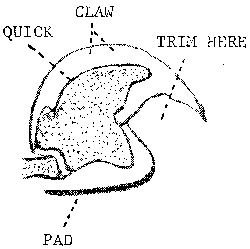
When trimming the canine claw go slowly until you stop seeing dry, crumbly toenail and start to see a fleshy bullseye. This is a good indication that you are to hit the quick. If you do simply apply Qwick Stop Powder. This will stop the bleeding and help prevent infection. In the dog you can usually trim more off of the front feet than the back feet. Toesnails often need to be trimmed every 4 weeks.
Felines often need their nails trimmed every 3 weeks. They have a distinct clear hook and can have the entire hook removed without hitting the quick.
Chris
Office Manager
Morris Hospital for Veterinary Services
26684 Grand River
Redford, MI 48240
313-537-6100
http://www.morrisvet.com/
http://morrisvet.smugmug.com/
Sunday, August 30, 2009
Leaving Your Pet with the Pet Sitter
We all love our pets. However, sometimes we need a break-even from them:) Whether it is a pet sitter or a boarding kennel you can avoid unnecessary heartache if you leave very clear emergency instructions for them.
Make a list of emergency numbers that can be left by the phone, placed in a chart, and a pocket sized reference card. This way the facility or sitter can grab and make necessary calls from the road or clinic. Information such as your preferred veterinary clinic, nearest 24 hour emergency clinic, your/alternate cell phones, and hotel numbers.
So now the sitter can call you, but what if you are lazing away in the ocean taking a surf lessen? Or in the woods on a hike with no cell phone signal? The next best thing is your wishes in writing. Now this does not mean plan for every possible emergency that could happen. This means a general overview of your wishes. Put a budget in your letter. Perhaps you are willing to authorize a budget of $400; put it in writing. No one ever wants to have to end their pets life, but consider adding a clause such as if bill will exceed X, all attempts to reach me have failed, and my pet is suffering please euthanize. Example:
I will be staying at X. I will be reachable at X, Y, Z. I authorize any medical services deemed necessary to be performed in an emergency situation. I want all measures used to extend my pet's life. Please take my pet to X clinic if they are open. Please take my pet to X emergency clinic if not.
or
I authorize up to $500 to be spent on medical services necessary in an emergency situation. I wish only the bare basics be performed to stabilize my pet. My pet is Do Not Resuscitate. If the bill will exceed this amount and my pet is suffering, please euthanize.
Don't forget to sign the paper. It can be considered a legal document. In case no attempts to find you work and you would authorize a high amount, consider leaving your credit card number temporarily on file with them. This type of financial payment arrangement frees up the clinic to perform necessary services in the security of knowing they will be compensated, and you the peace of mind to know your pet will receive care.
Little details like this can really give you peace of mind. Knowing that your wishes will be honored can take a large burden off of you when you can't be there.
chris
Make a list of emergency numbers that can be left by the phone, placed in a chart, and a pocket sized reference card. This way the facility or sitter can grab and make necessary calls from the road or clinic. Information such as your preferred veterinary clinic, nearest 24 hour emergency clinic, your/alternate cell phones, and hotel numbers.
So now the sitter can call you, but what if you are lazing away in the ocean taking a surf lessen? Or in the woods on a hike with no cell phone signal? The next best thing is your wishes in writing. Now this does not mean plan for every possible emergency that could happen. This means a general overview of your wishes. Put a budget in your letter. Perhaps you are willing to authorize a budget of $400; put it in writing. No one ever wants to have to end their pets life, but consider adding a clause such as if bill will exceed X, all attempts to reach me have failed, and my pet is suffering please euthanize. Example:
I will be staying at X. I will be reachable at X, Y, Z. I authorize any medical services deemed necessary to be performed in an emergency situation. I want all measures used to extend my pet's life. Please take my pet to X clinic if they are open. Please take my pet to X emergency clinic if not.
or
I authorize up to $500 to be spent on medical services necessary in an emergency situation. I wish only the bare basics be performed to stabilize my pet. My pet is Do Not Resuscitate. If the bill will exceed this amount and my pet is suffering, please euthanize.
Don't forget to sign the paper. It can be considered a legal document. In case no attempts to find you work and you would authorize a high amount, consider leaving your credit card number temporarily on file with them. This type of financial payment arrangement frees up the clinic to perform necessary services in the security of knowing they will be compensated, and you the peace of mind to know your pet will receive care.
Little details like this can really give you peace of mind. Knowing that your wishes will be honored can take a large burden off of you when you can't be there.
chris
Saturday, August 29, 2009
What IS Coming Out of My Dog?
As we go into the holiday season we begin to cook yummy foods, invite friends over for parties, and-it has to be said- share our bounty with man's best friend. As we all know, what goes in must come out, often in BAAAAD ways.
Vomiting and diarrhea can quickly dehydrate a pet, can make them miserable, can indicate serious illness, and can lead to death. The trick is taking quick action to try to minimize a worsening of the condition. (This must be balanced with common sense and knowing when to go to the vet)
At the first sign of vomiting withhold ANYTHING by mouth for 24 hours. This gives the tummy a chance to rest and heal. Hopefully this will clear the condition up and Rover will feel great in no time. However, if your pet is lethargic, not acting right otherwise, or your gut says to be scared, call your vet or a 24 hour clinic. If after the fast the pet continues to vomit or at any time deteriorate call your vet.
At the first sign of diarrhea or loose stool ( and your pet is otherwise acting fine) withhold food for 24 hours, but offer water. When reintroducing food switch to boiled ground turkey/rice offered in small, frequent amounts. This is bland and easy to digest. You can also add in 1tsp-1tbsp of unflavored Metamucil to help absorb excess water in the colon. If this does not resolve quickly, the pet begins to deteriorate, begins to vomit, or has blood in the stool call your vet or 24 hour clinic immediately.
Always consult your vet at the first sign of illness. This will keep your costs down and improve the odds of a speedy recovery. These tips are only to be used to get you through the period of time until you can reach your vet. Please use your best judgement when to seek emergency medical attention.
chris
Wednesday, August 19, 2009
What Is Love
End of life care is never easy or simple. No matter how long you have been with your pet, whether it is months or years, it is never enough. No only are you trying to decide the most compassionate course of action, you also have to consider that little thing that illness often drains: finances. The already heavy burden of decision now is clouded by even considering putting a "price" on your relationship. (Heavey sigh)
Trying to extend life is rarely inexpensive. Many times owners try to equate the deepness of the love with the deepness of the pocketbook. Let's set something straight right now; love is not about how much you can spend on your pet. While seeing how little you can spend and the pet manages to survive won't win you any metals either, love should be measured in the everyday kindnesses.
No one has escaped this economy. Many of our clients who walk through the door and say "Do whatever she needs, doc" are now saying "Can I have an estimate first" and some even say (GASP) "No" to services. These people still love their pets deeply. They won't let them suffer, but sometimes they have to set limits.
Love is measured in the scratches behind the ears, the tosses of the ball, the tasty, wonderful treats, the furry mouse covered in catnip. It is measured by how often we stop what we are doing and spend a few precious moments being unproductive and cuddling our little furries.
We're not judging you by your financial statements. You need to stop also. Give yourself permission to do the best that you can. Sometimes that decision is too end your pet's suffering, even when the checking account must surrender before medicine must. If it comes from a place of love and commitment that is what is important. Yes, love is measured in everyday kindnesses.
chris
Sunday, August 16, 2009
"Dominance" and Dogs
Check out the findings from this recent study dealing with aggression in dogs.
"ScienceDaily (May 25, 2009) — A new study shows how the behaviour of dogs has been misunderstood for generations: in fact using misplaced ideas about dog behaviour and training is likely to cause rather than cure unwanted behaviour. The findings challenge many of the dominance related interpretations of behaviour and training techniques suggested by current TV dog trainers."
Full article http://www.sciencedaily.com/releases/2009/05/090521112711.htm
chris
Is Pet Insurance Worth It?
As pet lovers we want the best care for our beloved pets, but that care can be very costly. You may have heard of pet insurance and wondered is it worth it and how does it work? VPI Pet Insurance www.petinsurance.com/ has a very comprehensive overview of how pet insurance can benefit you. Pet insurance is a reimbursement program so you will never hear “We don’t accept that.” You recover a portion of your bill so this frees you up to pursue treatment options that would have been too cost prohibitive. This also helps to take the sting out of the price of extensive surgeries, procedures, or diagnostics that would otherwise have to be declined. Some insurers even help with yearly routine care such as vaccinations, dental cleanings, and flea/heartworm medications. Purchasing pet insurance brings peace of mind. At the end of the day, in an emergency, when your pet’s life may hang in the balance, only you can answer “Is it worth it?”
chris
chris
Wednesday, August 12, 2009
Old Age is Not A Disease
It doesn't matter if it be pet or human, we have the wrong end of the stick. Elderly has become synonymous with one step from checking out. Why put good money after bad. They're old, they won't care. In some cultures the elderly are revered. Not in the disposable society that we have learned to become.
I have a theory that you go out the same way you come into the world; naked, not exactly potty trained, maybe not too coherent, time consuming, a money pit, and you can't get anyone to take you seriously. In television the key demographic is 18-34 year olds.
So whose criteria should we use? What is the criteria to not "bother" giving, let alone offering quality of care? To me the criteria should be on the other side of what price will that pet pay and how will they come out? A surgical procedure is going to be much more traumatic on a 10 year old Great Dane than an 11 year old toy poodle. Does that mean that I pass? Dr. Morris always weighs the risks verses the benefits. What is the procedure? How painful will it be? Can we keep the pet relatively comfortable? Can the family financially handle the burden of the procedure or medication? Is the pet healthy enough that it will receive benefit? Will the pet be healthier afterwords?
In my practice you will never hear the phrase "Well, he is just to old to do X". Unfortunately, there are certain diseases and conditions that affect older patients. Certainly age and infirmity complicate matters, but they don't necessarily remove treatment options. Performing dental procedures can improve cardiac, renal, and liver function and extend good quality of life. Removing cancerous tumors can sometimes be curative. Medications can drastically improve pain in our arthritic dogs. Never should age on a piece of paper be the deciding factor when considering treatment options, medications, or diagnostics.
We can't prevent death, nor should we try. Not every procedure is right for every patient. Not every family can afford to go to the ends of the earth in options. There are many factors considered when deciding which patient and plan fit. It is a personal decision made between owners and their vets. But the least of these is a number decided by a calender.
chris
Saturday, August 8, 2009
The Makings of a Veterinary Clinic
"Find a job you love and you'll never work a day in your life. " - Confucius
This is such a deep, powerful quote. Coming to work with a cheerful heart helps you to support your clients, heal your patients, and gives you the drive to learn everyday. Making a successful clinic is like a recipe; you start with the basic concept, you tweak and always strive to get it a little better, you take others' ideas to improve it, and you share it with many.
Your first ingredient is the staff. That correct mix of veterinarians and support staff makes you efficient and strong. These people must know their stuff, constantly work to know more, and care about the people and pets they serve. They must respect each other, support their clients, demonstrate compassion, and be able to communicate with various people.
Your second is to add pets. These are the cuddly little well and sick creatures that we become attached to. We watch the little puppies and kitties come in as babies and help them until their last days with us. They teach us so many things; don't move so quickly, sometimes just a scratch behind the ears will make me happy, I hurt and I need help, I love you and I'm so glad you're here. Listening to their genuine little hearts keeps us all working a little harder.
Your third ingredient is the client. Without their trust in us to help we have no business. We become so close to our clients. We celebrate their joys, and grieve their sorrows. We watch their human and pet families grow and change through the years. We really get to know our clients' preferences, needs, personalities, and how to individualize care to them.
Lastly, season with a generous sprinkling of good diagnostics, equipment, and products. Stir, serve, repeat as necessary. No fat or calories in our recipe. Just wholesome, heartfelt service. Feel free to pass this recipe on to your friends.
chris
Subscribe to:
Comments (Atom)
